In this story
A small side dish can open up a much larger food world. Kimchi is not limited to one vegetable or a single level of heat. Notice the ingredients, the style and the dish beside it. The familiar name becomes more interesting when you allow different versions to taste different.
Look beyond one cabbage recipe
Cabbage kimchi is familiar, but diced-radish kkakdugi and watery kimchi offer different forms. Begin with the vegetable and the presence or absence of liquid. Read the name on the menu or ask what you are being served. Remembering a specific style is more useful for the next meal than assuming everything called kimchi will taste the same.
Do not use color as an ingredient list
Color provides a clue, not a complete recipe. Some styles do not use red pepper, but a pale appearance does not establish a dish’s ingredients or suitability. Seafood seasonings and other additions depend on the recipe. Ask about what was actually used rather than treating the word kimchi as a dietary label.
Notice how the flavor changes
Compare acidity and texture without assuming one maturity level is always better. Taste a little beside rice, then notice how it fits the rest of the meal. The aim is to identify the balance you enjoy, not to rank every version against a single imagined authentic flavor.
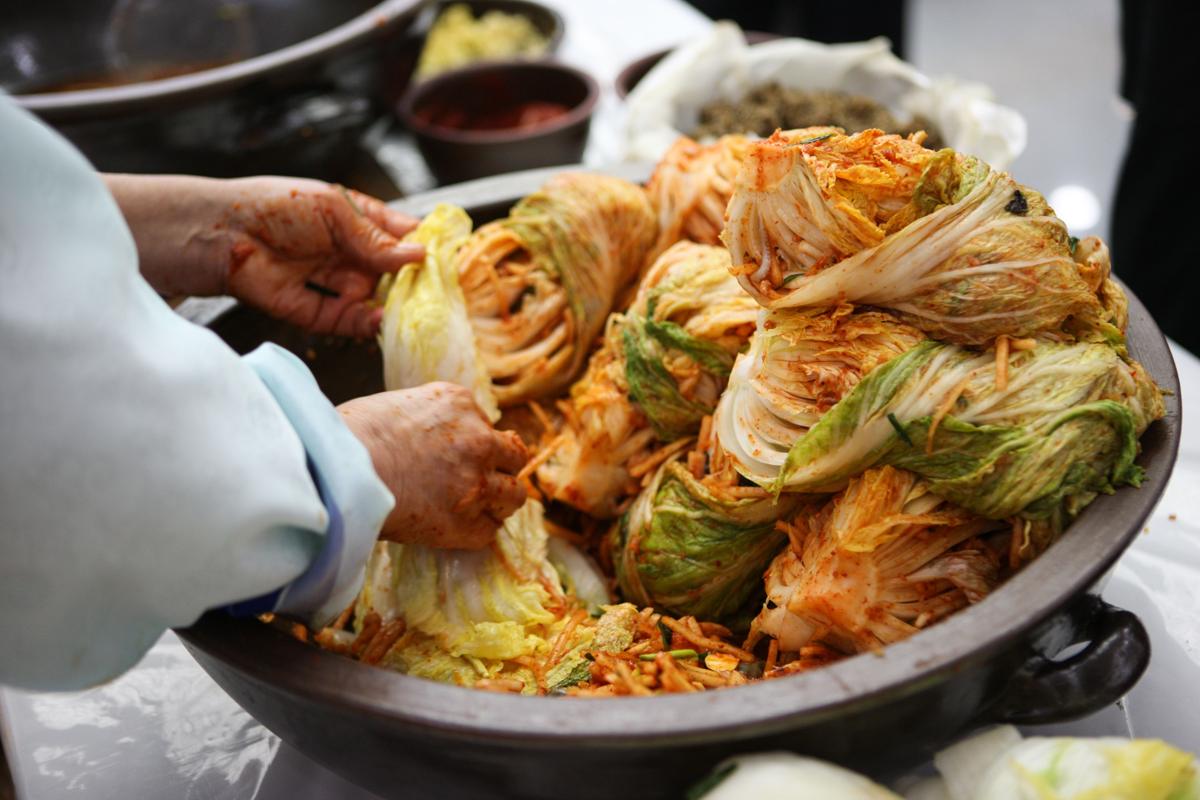
Kimjang is a practice of making and sharing
UNESCO’s kimjang inscription concerns making and sharing kimchi in the Republic of Korea. It recognizes a cultural practice rather than endorsing one packaged product. For an activity, ask which stages you will learn, what language is used and what participation conditions apply. Learning the process gives a different perspective from a quick tasting.
Choose an experience and any purchase deliberately
Confirm the date and content of a workshop before booking. If you can take food away, ask about its packaging and storage. For a purchase, read the label and size and check transport and destination entry requirements separately. A product sold locally is not automatically suitable for every onward journey.
Questions before you go
Is every kimchi red and spicy?
No. Styles without red pepper exist, but confirm the recipe rather than judging only by color.
Does UNESCO recognize a particular kimchi product?
The inscription recognizes the practice of making and sharing kimchi, not a particular commercial product.
Sources and photographs
An editorial story informed by official tourism and operator sources. Suggested routes and ways of looking are DAYGOVISIT recommendations, not a claim of a first-hand visit. Confirm current arrangements with the operator.
Editorial review: